
Artificial intelligence and port performance: where do African ports stand?
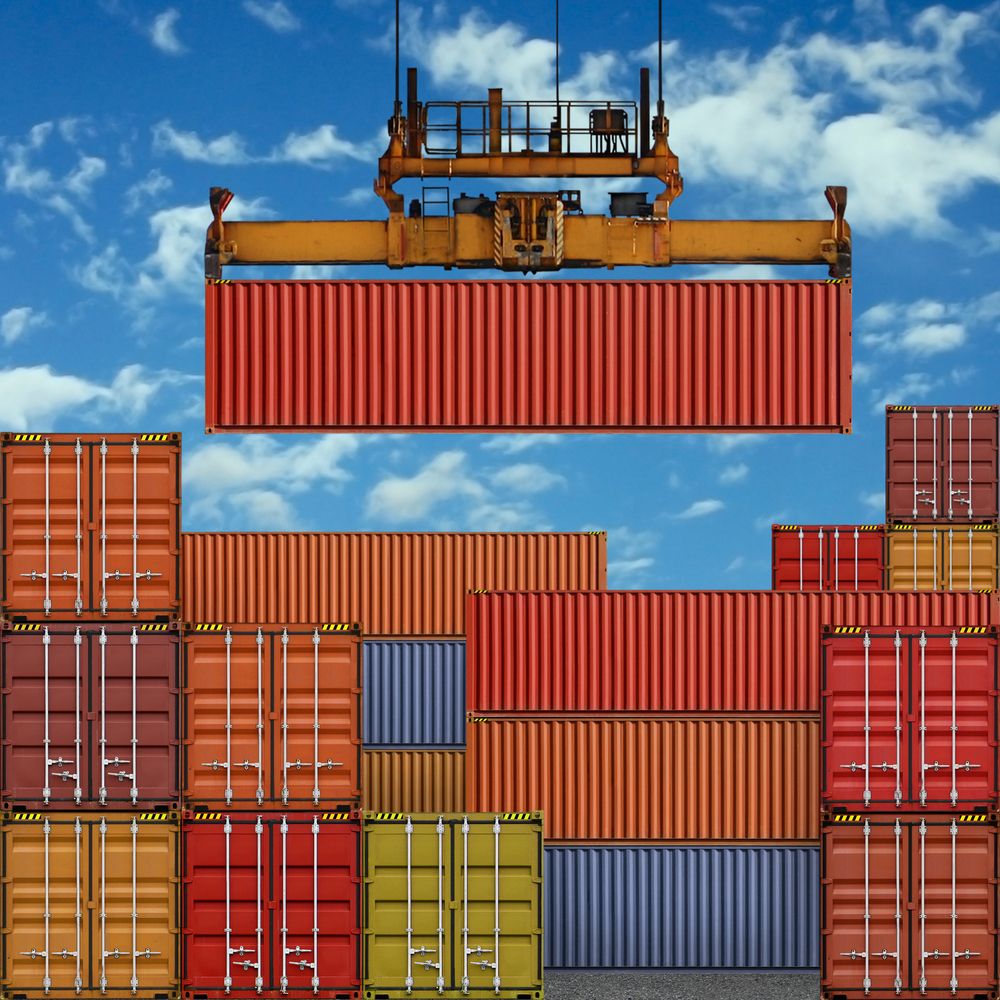
When we talk about artificial intelligence applied to ports, the imagination often turns to fully automated terminals, like some of the large hubs in Asia or Europe. This vision, costly and remote for most African ports, hides a more immediate reality: today AI is being deployed mainly through small, targeted building blocks with a high return on investment, rather than through a total transformation all at once.
Three families of uses that are already mature
The first family of uses concerns operational forecasting: estimating a vessel’s arrival time (ETA) more precisely, anticipating congestion peaks at a terminal, or optimising berth allocation based on traffic history. These predictive models, trained on the data already collected by most terminal operating systems, do not require new heavy infrastructure, only a willingness to exploit existing data rather than continuing to plan on human experience alone.
The second family concerns predictive maintenance of equipment: gantries, cranes, handling machinery. IoT sensors installed on a limited number of pilot machines make it possible to detect weak signs of wear before a breakdown, reducing the unplanned stoppages that cost the most in downtime. It is often the most concrete gateway to automation for a port that does not yet have a complete digital twin of its facilities.
The third family, more emerging on the continent, relates to security and anomaly detection: automated video analysis to spot unusual behaviour, detection of anomalies in cargo manifests, or cross-referencing of data to identify documentary inconsistencies. These uses strengthen operational security without replacing existing human arrangements, helping them concentrate their attention where the risk is statistically highest.
The often underestimated prerequisite: the data itself
None of these uses works without reliable, structured base data. A port that wants to deploy an arrival forecasting model must first have a usable history of vessel movements; a port that wants to do predictive maintenance must first instrument its equipment. Artificial intelligence is therefore never the first project of a port undergoing digital transformation: it comes after, and amplifies, the investments already made in the basic digital infrastructure (single window, traceability, connectivity).
An opportunity to catch up, not only technologically
For many African ports, the good news is that these technologies are now available as modular solutions, without requiring the massive investments of the world’s largest hubs. A medium-sized port can legitimately aim, within twelve to eighteen months, for a first measurable AI use case (a forecasting function on its most critical process, or a predictive maintenance pilot on two or three machines) before considering a broader extension. It is this logic of step-by-step progress, rather than a single technological leap, that the COPAF 2026 conference places at the heart of its exchanges between African port managements, under the theme “Smart African Port: AI and Cybersecurity for Performance”.
From 19 to 21 October 2026 in Casablanca. More information and registration at copaf-ports.com/inscription.